The final days of the Ace Cafe

Reader Josh I. explains:

Don’t know if you ever went to the Ace Cafe, on 14th and Mission, but it was one of those bars seriously beloved by a cadre of local motorcycle enthusiasts. Filmmaker pal Henry Dombey recently completed this short film following the last days of the bar.

It’s a moving little movie:

Man with ’70s sideburns and ’70s clothing posing for a series of photos

Found atop of a pile of discarded junk on York Street. Who this is?

Let’s take a closer look:

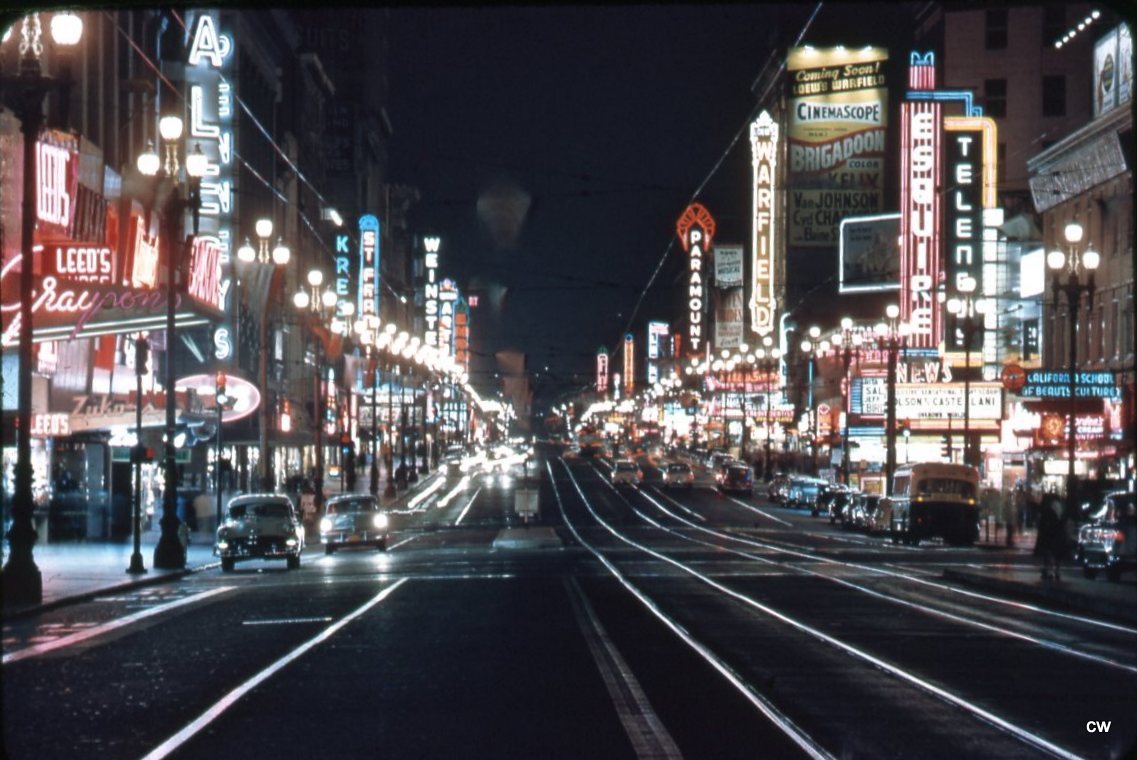
Happy holidays from Mission Street a million years ago

[via The Tenderloin Geographic Society]

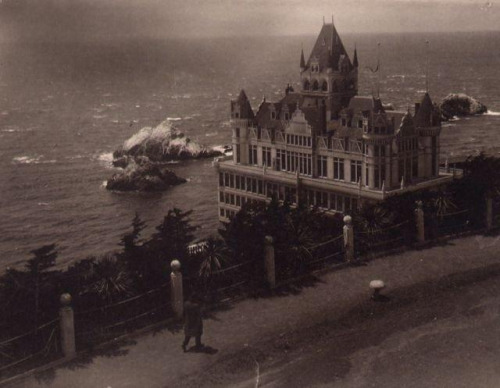
Weird old North Van Ness landmark gone for good

The Tenderloin Geographic Society reports:

Let us remember with fondness the house that Q*bert built, for it is no more. [link]

If only we’d left the Mission more, maybe we’d have been able to enjoy this thing more. I think I saw one movie in that place, and I think it was some kind of special screening of the Coen Brothers’ now classic The Man Who Wasn’t There, and they handed out promotional plastic combs. I am remembering this with fondness.

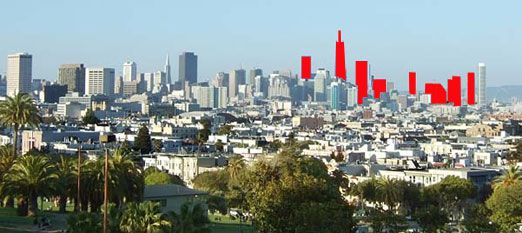
San Francisco history: A politically charged coloring book illustrating the dangers of high-rise buildings in SF

It was kind of an art project, kind of a protest, from a time when citizens were about to vote on whether or not to allow more high-rises to be built. Gravel & Gold today published some pictures and an explanation by the great Tom Wolfe:

This coloring book is the work of 16 artists, and I like what they’ve done. (I haven’t written home about it, you understand, but I like it.) But I also like it for what it illustrates about the problems of social protest graphics. A high percentage of the entries for the show fell in that category, and almost all of them show the artists’ natural instincts (Me!) working at cross purposes with the cause he is lending his talent to. This coloring book was created in support of Alvin Duskin’s campaign to stop the spread of high-rise building in San Francisco (“ecology”). . . But most of the artists were obviously far more intrigued by the graphic possibilities of skyscrapers and Heartless Tycoons than of low-rise buildings and the common man. I’m sure that all children who actually used this hook learned to love skyscrapers and were filled with the ambition to build one, or at least go see a few.

Read on for more analysis from Wolfe and of more pictures.

Google Maps, 1853 Edition

Hey, look, a map of San Francisco!

Waaaaait a second, something’s different about this. <insert Wayne’s World time travel music> It’s Google Maps, 1853! Behold PastMapper, an utterly epic work in progress on the part of @bradvertising, bringing the 1853 Coast Survey map to life and geotagging the 1852 city directory on top of it.

In the 1850s, the Mission was where you went to party and drink on the weekend. The Mission Plank Road (the curve of which BART follows today) was completed in 1851.

There was a toll — just 25 cents for riders on horseback, 75 cents for two-horse wagons, one dollar for a four-horse team! (What a bargain compared to BART or Muni.)

Well, not so fast — a dollar in 1853 was worth about $30 today. A glass of ale cost 12 and a half cents, and the typical fine for drunk/disorderly conduct was $5.  Needless to say, lots of folks hoofed it along side trails, cutting through the sand dunes and Hayes Valley.

Anyway, the 1853 is only the start for Pastmapper.  I have it on good authority that the much more expansive 1857/1859 Coast Survey map (with much more of the Mission) is on the to-do list.

Pastmapper: bringing you yesterday, today!

This month in Mission Mission: December

2010

2009

2008

2007

This Month in Mission Mission: November

2010

2009

2008

2007

How to park your car in the Mission (in 1938)

It’s 1938. You need to go shopping on the Miracle Mile but you can’t find parking between 24th and 25th. What do you do? Park in the Southern Pacific right of way, naturally.

That’s 24th on top, 25th down below, Mission on the left and Capp on the right. Rosamunde now sits in the west side of the former tracks, and Foot Locker on the east side. And Killing My Lobster is doing a kickstarter to open up their theater space just to the south of the old tracks.

Zoom and enhance!

Given the less than precise angles of the parked cars, the train was obviously not running frequently in 1938 (though I do like to imagine it barreling through and knocking cars asunder.) In fact, Southern Pacific would give up the line by 1948.  Note that the railroad was originally built in the 1860s and pre-dated the Mission street grid by a few years.  It took its jaunty angle to avoid two horse race courses that were in the area.

BurritoVision ON:

And a wider BV view. (The photos were taken at different angles so it doesn’t align as nicely as I’d like.)

Hmm, just noticed the arches over 25th and Mission:

I knew there were iron arches over Fillmore that were torn down during WWII, but not on Mission.

Anyway, do thank David Rumsey and the SFPL for being awesome. And I wrote more about it over here if you didn’t see it already.

Mission theaters history talk tomorrow

Surely you’ve wondered what went on at all those run-down theaters lining Mission street before they were converted to dollar stores, parking structures, and termite farms. Well now is your chance to find out. Jack Tillmany, a San Francisco transit and theater historian, will be hosting a free presentation tomorrow, Wednesday 10/19 7pm at the Bernal Heights Public Library.

During the golden years of moviegoing in the first half of the 20th century, just about everybody went at least once a week. Ten thousand people a day went to the movies in San Francisco on Mission Street alone. Most of the theatres are gone now, or, worse yet, sitting vacant and abandoned as sad reminders of what once was, but will never be again. But a couple of them have been in business for more than a century and continue to survive and, let us hope, prosper.

Transit and movie theatre historian Jack Tillmany’s presentation offers a guided tour of just about all of them, from 16th Street through the Mission and Bernal Heights to Daly City, in black and white and in color, along with the many streetcar lines that provided transportation on San Francisco’s longest thoroughfare. Best of all, the presentation is free — and all attendees will receive a free, authentic souvenir of the streetcar era!

Interesting history talks sound like the perfect companion to Whiskey Wednesdays at Bender’s! Unofficial after-party?

[via Bernalwood]